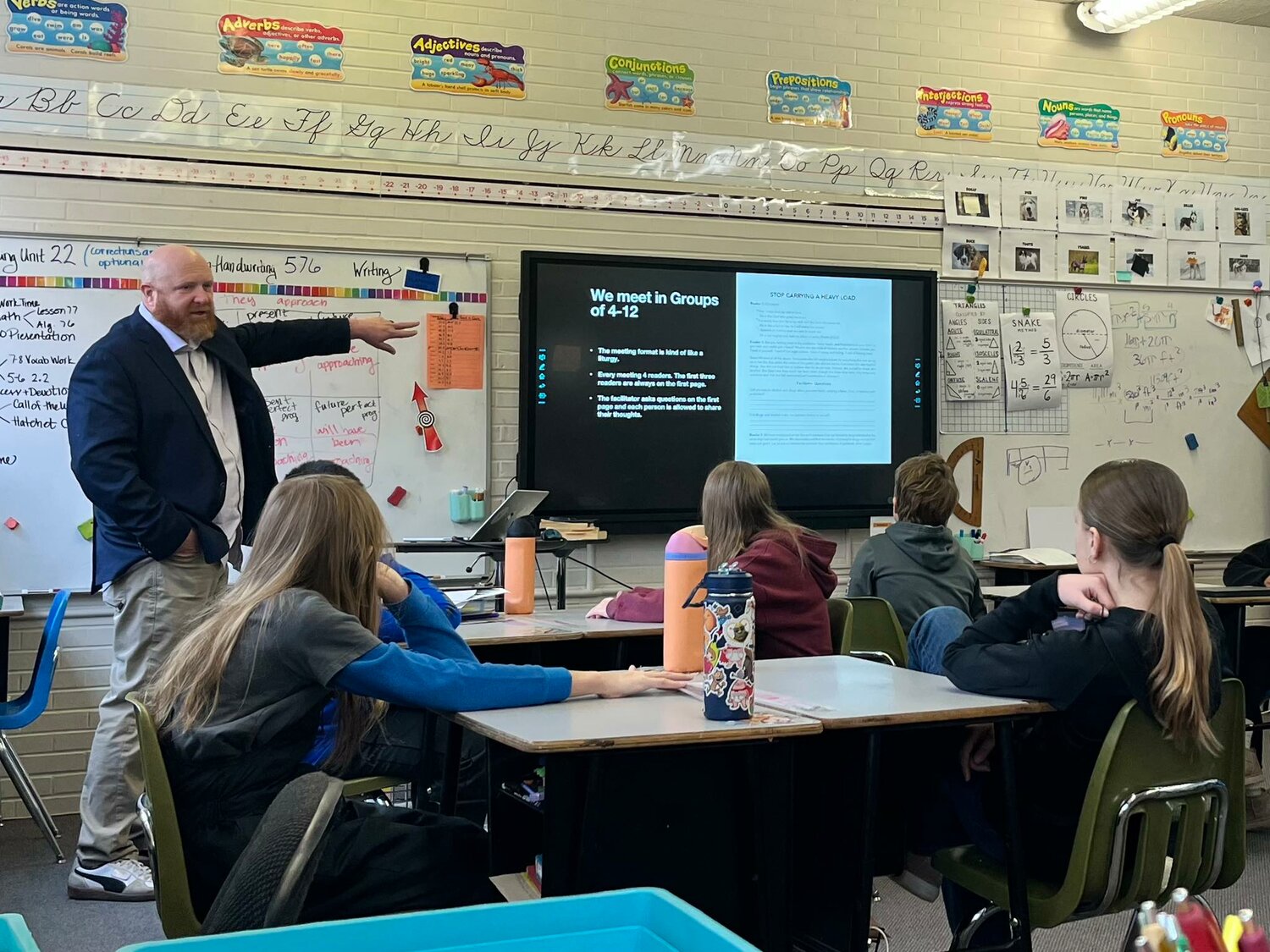
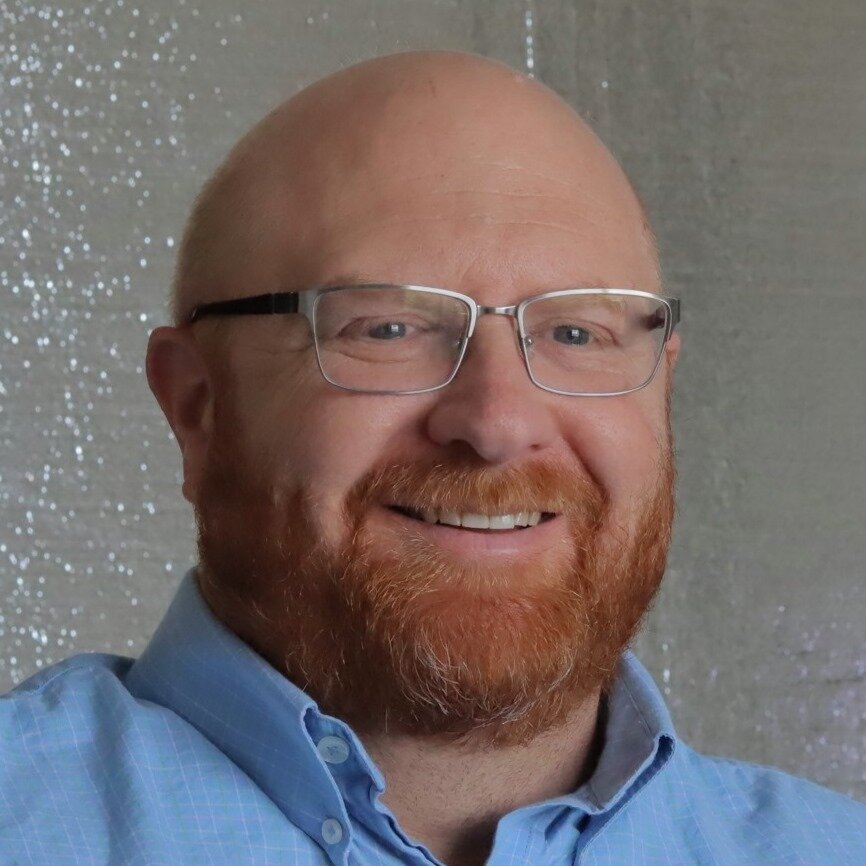
Where do you go to find addiction recovery help? In today’s world of Internet access and Zoom meetings, help is at your fingertips. Many local resources are available through county, church and organized programs. You can also join an online program without leaving home. One online support option is the Resilient Recovery program led by Jason Jonker. The Bible-based program operates from Phoenix, Arizona with an online course option. Jonker visited the Goodhue area in February, sharing the work he does with local students.
Jonker is a Michigan native currently living in Arizona. After grad school he became a therapist working in a mental health clinic as director, regional director and vice president. While still working at the clinic, he founded the Resilient Recovery program through Crosswalk Church in Phoenix in 2017. Jonker left his job at the clinic 5 years ago to focus on the program that started with a few church members and expanded to four other churches, rehab facilities, prisons and the online courses.
Jonker says the program does not provide treatment for addictions but supports recovery and provides spiritual direction. Comparing it to a physical illness such as cancer, he says he and the 20 part-time volunteer coordinators and Bible study facilitators are not doctors but provide spiritual treatment. Jonker created a workbook that utilizes a law and gospel approach to addiction and mental health support. Each lesson uses scripture to identify human faults, lead to confession and find forgiveness. He explains that Resilient Recovery is not a 12-step program saying, “Our goal is to welcome people (and show them) how Christianity might support their recovery. People do get better learning about faith—or more about their faith. Whether you make amends or not, you are forgiven and that is motivation to change”.
As a trained chaplain through the Wisconsin Evangelical Lutheran Synod and his 20 years in the mental health clinic, Jonker has vast knowledge of addiction. “Age of first use can determine the trajectory,” he says of chemical abuse, adding, “Every year kids wait, helps”. People may become drug addicted seeking relief when they feel their situation is terrible. Others may start using, thinking it can’t make their terrible situation any worse. Many find it easier to remain addicted than to go through the chemical process of detox and withdrawal. Addicts often come from dysfunctional families or suffer from Post-Traumatic Stress Disorder and may not seek help until they reach a point Jonker calls the “Everything must go sale”, meaning they have lost their job, spouse, kids and housing.
The Phoenix area has a large homeless population, many with meth, fentanyl and alcohol addictions. There is a system of sober living homes to combat the problem. Day programs connect people with nurses or psychiatrists that will refer them to Resilient Recovery. Some come in off the street with meth addiction psychosis, rambling incoherently. Some come in to rehab with a bad attitude and most struggle with a cycle of hopelessness and shame. Often, it is a lifetime battle, returning to the program numerous times.
Jonker says it has been hard to track success of the program as people move out of the area, lose phones and change their number. “We’ve invested a lot of time and energy in them and no one knows where they are.” “I can’t predict it,” he says of individual outcomes. Resilient participants may join the church, possibly relapse, or go on to get jobs and give back to the program and community. Jonker shares the story of a Native American woman with no Christian background who came to church, was baptized and after completing the program, works in a rehab facility that directs clients to Resilient.
A woman born in prison, tossed around the juvenile system and landing in prison herself, crediting Resilient with helping to turn her life around saying, “Now I know that nothing can stand between me and God”. Another female inmate towering over six feet tall and previously selling fentanyl for the cartel, renounced her Satanist religion and found forgiveness. “We plant and water but God causes the growth,” Jonker says of positive outcomes.
The Resilient Recovery program regularly sees 20-40 people attending at churches with a 12 person cap at prisons. Prisoners have to apply for the 10 lesson course to verify need and suitability. Jonker sees good attendance and retention among those who opt in to the gospel-motivated recovery. Long-term, Jonker hopes to “Take people out of programs and put them in to pews and potlucks”. Sadly, some enter rehab already near death and Jonker only has opportunity to simply share God’s word.
During a recent visit to Minnesota, Jason shared God’s word and how he uses it in the program, with students at St. Croix Lutheran Academy in West St. Paul, and St. John’s Lutheran Schools in Red Wing and rural Goodhue. Robbin Robbert, pastor at St. John’s Goodhue, accompanied Jonker and is looking into starting a local Resilient Recovery program that uses Jonker’s law and gospel based lessons and workbook. Resilient is an acronym derived from the basis of the program:
R-est in Jesus and His care
E-xpress my need for Jesus
S-eek God’s presence and power
I-magine freedom in Christ
L-ive transparently by owning my sin
I-nvite Jesus to change me
E-xalt Jesus above all things
N-eutralize temptation through meditation on God’s word
T-ell others what God has done for you.
For more information and a link to the online program, visit www.restinjesus.org. You can contact Jason Jonker at Resilient@cwlkchurch or 602-491-4090. Locally, direct questions to Pastor Robbin Robbert at 907-315-3851 or email, pastrob2@yahoo.com.


