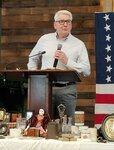
Women of the Goodhue County Home Study groups gathered at New Life Church in Wanamingo on May 4th for their annual spring festival. Festival chairperson and Home Study president, Patty Kempf welcomed members and guests. Secretary, Sharon Rechtzigel led the pledge and creed ahead of the noon lunch catered by Area 57 Cafe.
Tables were decorated with red, white and blue centerpieces, honoring the day’s “250th Anniversary of America” theme. Donated by each local group, the centerpieces were later given away as door prizes. Keeping with the theme, the afternoon program featured Civil War Living History Reenactor, Marie McNamara.
When the Civil War began in 1861, people expected it to last about three months, not four years. With the men gone to war, women’s rolls changed. Women went to work in shops and offices and had to run farms. Marie’s presentation focused on what the home-front was like during the Civil War. “What do I think about with my family at home? What are the basics that they need? They need food, clothing, and they need shelter.” Women of the 1860s focused on the same things.
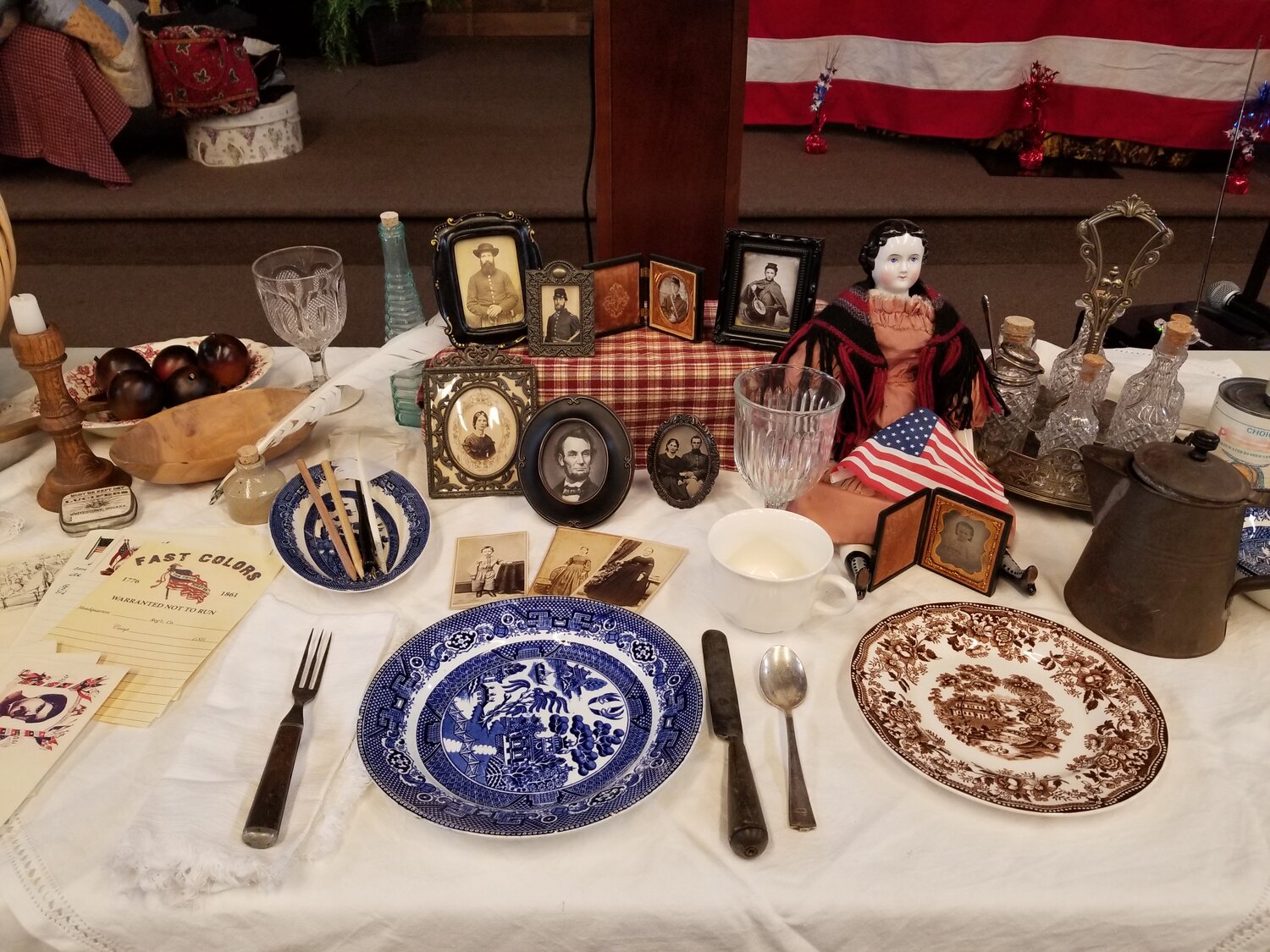
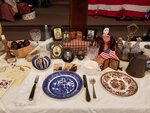
Grocery stores may have been some distance from home but canned food products were a useful new invention. Holding up and describing some of the many items in her display, Marie noted that women have always liked pretty things, including decorative plates and glassware.
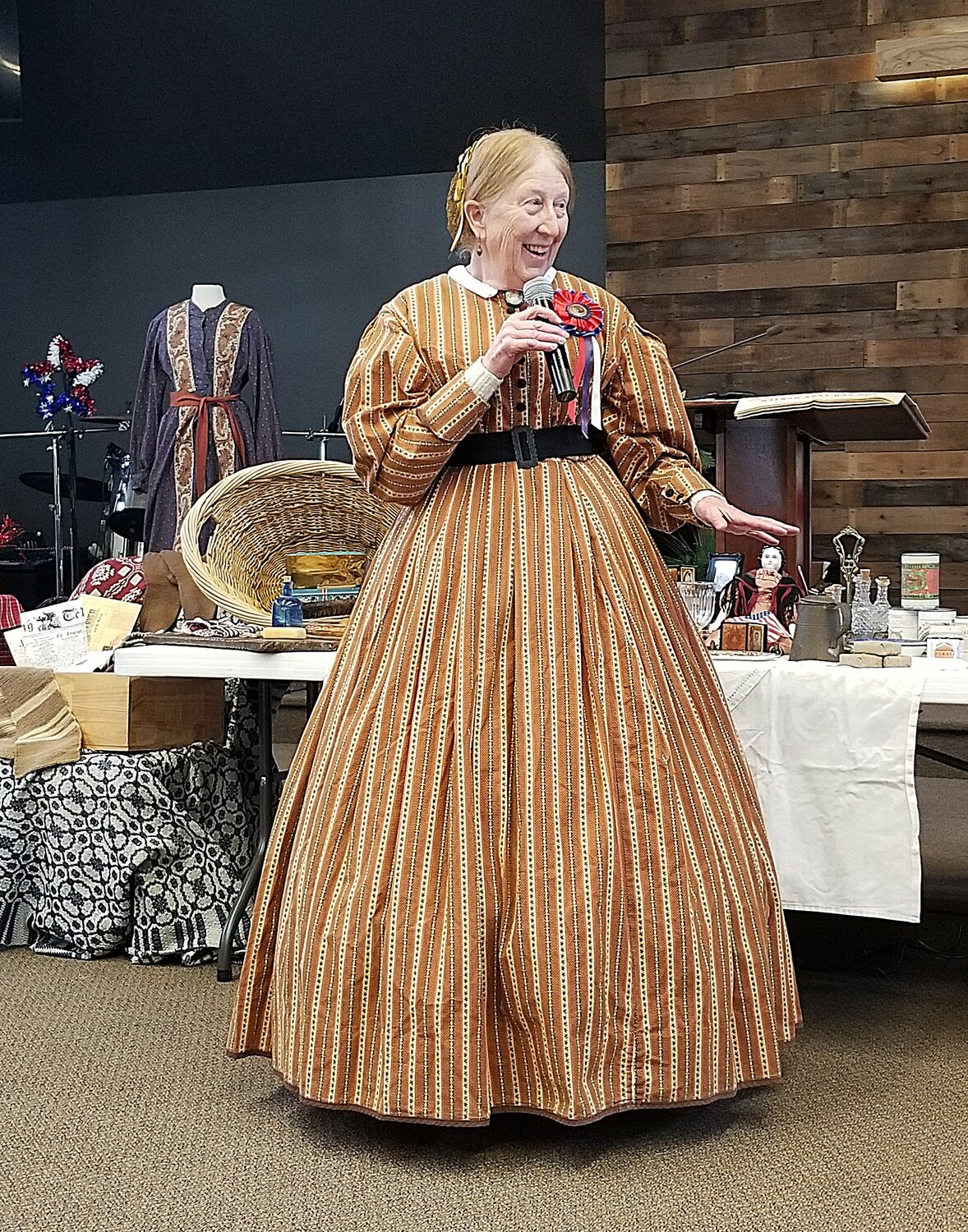
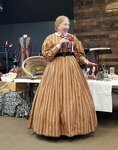
McNamara likes to say she “brings the museum to you”. Dressed in full 19th century costume, including bonnet and gloves, she says, “It takes as long to get dressed as it does to take all of the boxes (of display items) to the car”. Long skirts and layers were the style of the time. “You have to put on a pair of drawers and then you put on a chemise because that protects your dress from oils. And then you put your corset on. I’ve got a corset on. That was a big protective measure to hold yourself together plus support these hoops. I’ve got hoops on,” she said motioning to her waist. “I’ve got two petticoats on. You didn’t want the ribs of your hoops to show so you wore petticoats.” In the winter when the women went out to milk cows and feed livestock they might wear a shorter skirt, a wool petticoat and heavy socks.
McNamara showed other fashions of the era and explained how sewing machines were just becoming available and were one of the first ‘buy-on-time’ items. Women could group together and share one machine in a sewing club.
Dress material went up from 75 cents to $35/yard during the war. “The inflation was terrible for homemakers.” The price of other basic necessities like flour rose from $6/barrel to $1000/barrel. Coffee beans rose from 35 cents/pound to $60. Due to a Confederate blockade, the Southern states were not able to buy coffee at all so substituted things like ground acorns, chicory and roasted barley.
Women were nurses, spies, and soldiers but the great majority were at home taking care of the house, farm and family. Nothing they did was easy. “They were heating with wood and they would have the kids help a lot.” Women made soap and candles. “We were not in the industrial revolution—they did a lot from scratch”
The women knit socks and gloves, and sent letters and photographs to the men that had gone to war for so much longer than expected. Many of those men never returned home. During the 150th anniversary of the war (2011-2015), a project to find and refurbish the graves of Minnesota men killed in combat was initiated. Only 22 bodies had been returned as most were buried in the South near the combat sight.
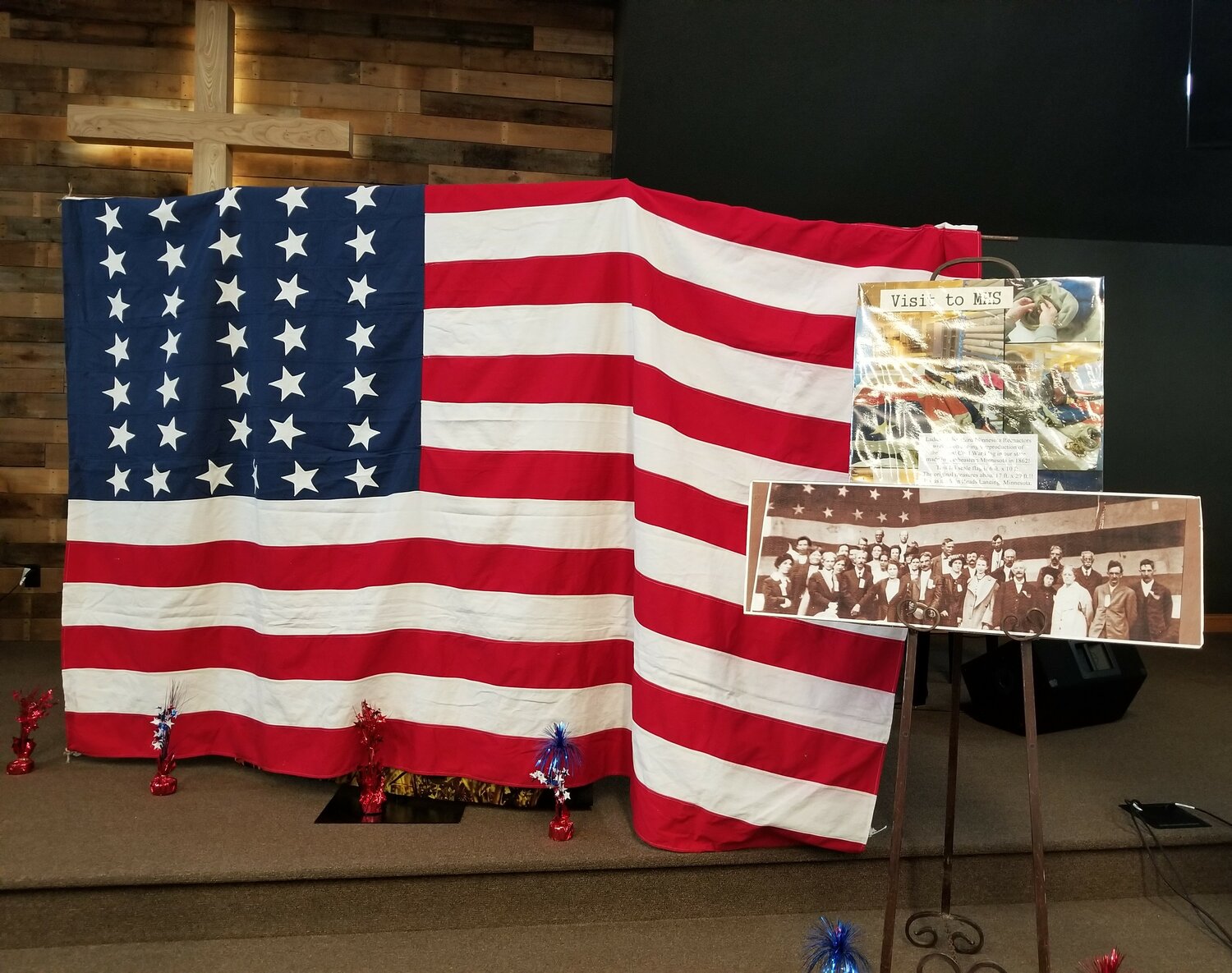
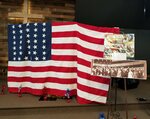
Lastly, McNamara shared the story of how a group of women supported the soldiers by creating the largest Union flag. 1862 was the worst year of the Civil War for the Union troops. “The patriotism ran so high with the women,” McNamara said, telling how they had a 110-foot flagpole erected by Reads Landing in Wabasha County to display their wool and cotton flag. At 29 feet long and 17 feet tall it is too large to be kept on display but can be seen by appointment at the Minnesota Historical Society in St. Paul. A 1/3 scale replica made in 2016 is on display at the Wabash County Historical Society Museum in Reads Landing.
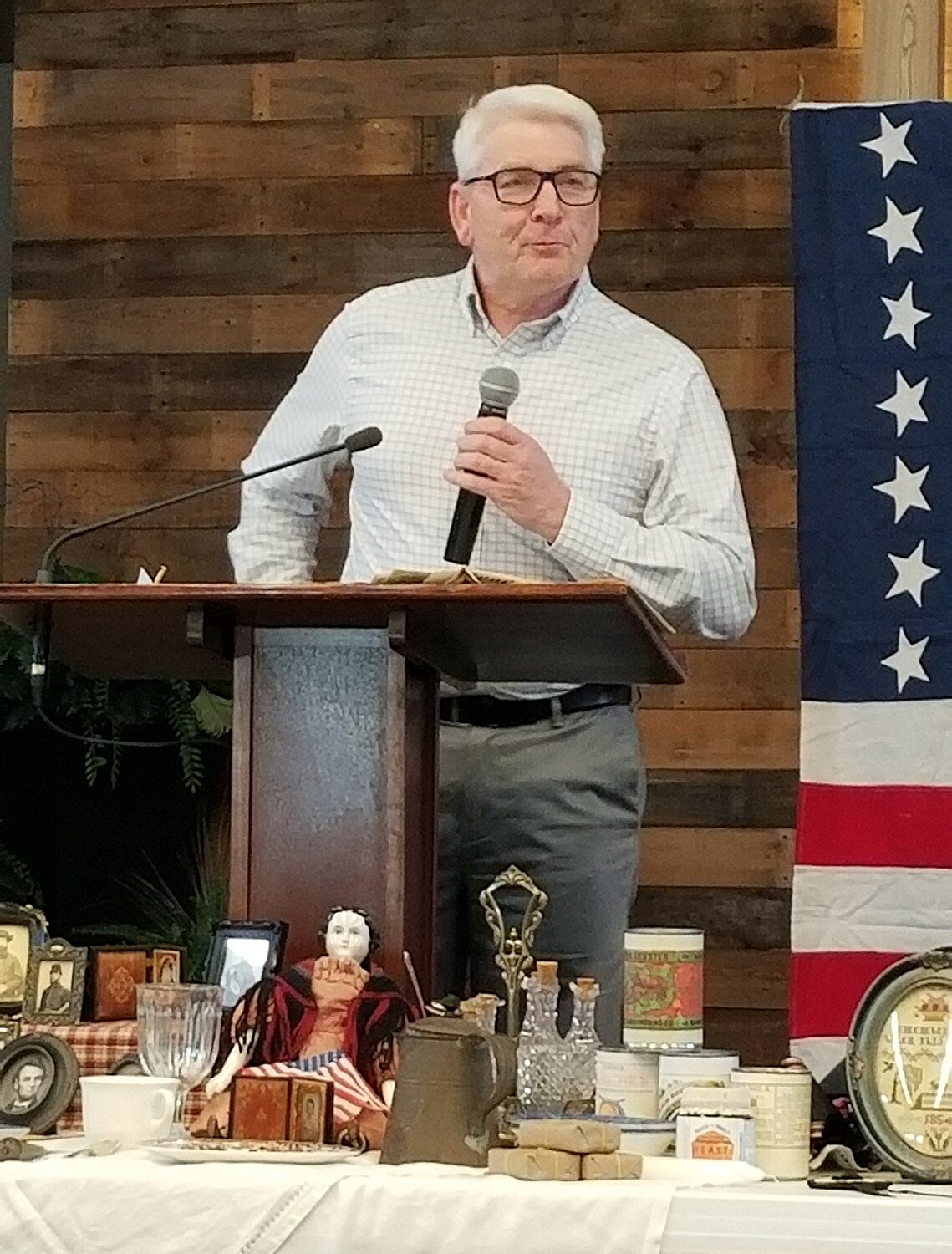
The event concluded with a medley of patriotic songs sung by Tom Ersland of Kenyon.
For more information on Goodhue County Home Study, including upcoming trips to the Chanhassen Dinner Theatre and the Granite Falls Casino and stops in South Dakota, contact Patty Kempf at 507-208-3409.
For information on Civil War Living History Reenactment, events, presentations and rates, contact Marie McNamara at 651-301-5410 or Randal Kuznicki at 651-380-1542.


